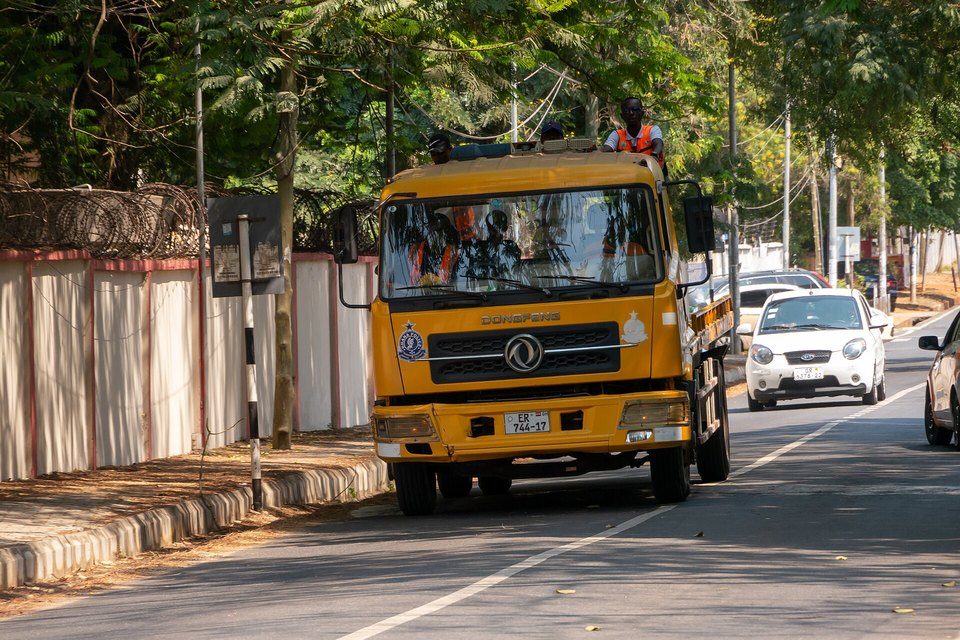
The policy targets a specific and long-documented hazard: vehicles abandoned on carriageways and shoulders for days, weeks and sometimes months. NRSA Director-General Abraham Amaliba told the Daily Graphic that stakeholder engagement had been intensified ahead of the nationwide rollout, and described the planned platform in dispatch terms. “Just like Uber, when your car breaks down in the middle of the road, you do not need to call a particular towing company that may be far from you,” he said. “All you need to do is to go to the platform and look for the nearest towing vehicle to pick the vehicle up.” The rules are not entirely new. Regulation 102(1) of the Road Traffic Regulations, 2012 (L.I 2180) already required the owner of a vehicle that breaks down on a road to notify the nearest police station or authorise a towing service provider within one hour inside a built-up area, and within two hours elsewhere. Regulation 214(2) requires at least one emergency warning sign to be displayed whenever a vehicle is stationary on a roadway or shoulder. In practice, the reporting notes, owners often leave vehicles in place and mark them with a tyre instead of a warning sign.
The evidence base assembled by the newspaper is a survey of the national network and a long run of crash statistics. Checks along the 696-kilometre Eastern Corridor Road, which runs from Tema in Greater Accra through the Eastern, Volta, Oti and Upper East regions, found many vehicles — many of them trucks — left on shoulders or in the carriageway. Disabled vehicles were also recorded on the Accra–Sogakope section of the N1, the 145-kilometre Accra–Cape Coast road, the 187-kilometre Aflao–Accra road, the 130-kilometre Takoradi–Elubo road, the 126-kilometre Kumasi–Techiman road on the N10, and on the Kintampo–Tamale, Accra–Suhum, Tarkwa–Bogoso–Ayafuri and Kumasi–Tamale roads. NRSA figures analysed by the Daily Graphic put road deaths in Ghana at 63,599 between 1991 and 2025. Over the ten years from 2012 to 2022, 687 of the 23,490 recorded deaths — close to three per cent — were attributed to abandoned vehicles on the road; scaled against the 35-year total, the newspaper estimates that about 1,908 deaths could have been avoided if disabled vehicles had been towed as the law already requires.
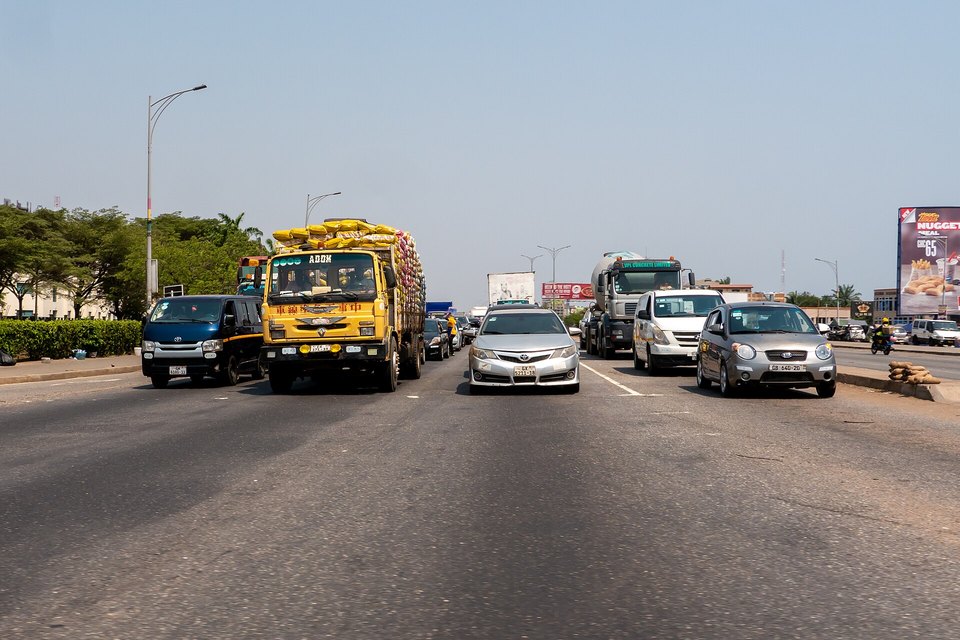
The crash record cited in the report is dominated by trucks left in place without adequate warning. In 2010, 20 people died at Dawa in Greater Accra when a Metro Mass Transit bus ran into a stationary truck at 4 a.m.; crash investigators found fatigue driving to be the immediate cause but identified the presence of the truck on the shoulder without adequate warning as the remote cause. On 20 January 2022, four people died and 39 were injured at Tuobodom in the Techiman North District when a KIA Grandbird bus travelling from Bolgatanga to Kumasi struck a disabled DAF articulated truck in front of Tuobodom Senior High School on the Kintampo–Techiman Highway. On 13 March 2022, five people died at 5:30 a.m. at Kwahu Oframase when a loaded mini-bus hit a disabled vehicle on the shoulder, and 11 people died the same day at Asuboi when a loaded high-occupancy bus struck the rear of a fallen container at 3:30 a.m.
A previous attempt at the same policy is the cautionary part of the story. In October 2016 the government, acting through the NRSA, signed an agreement with Road Safety Management Services Limited (RSMSL) for the towing of broken-down and abandoned vehicles, and announced that from 1 July 2017 owners would pay a mandatory road safety fee whenever they renewed roadworthy certificates at the Driver and Vehicle Licensing Authority. The measure was resisted by the public and collapsed, which the reporting attributes to a lack of adequate engagement. Drivers interviewed for the current report said the objective is right: Emmanuel Arko, who operates a 207 mini-bus on the Accra–Cape Coast route, said the risk from abandoned vehicles is greatest at night, while truck driver Joseph Magan, who runs the Kpassa–Accra route in about ten hours, said he passes faulty vehicles left on the shoulder on every trip. Cargo truck driver Konja Nlandon put the breakdown rate down to the condition of the roads and the difficulty of finding a mechanic and spare parts quickly, adding that trucks are sometimes left behind while parts are bought in Accra. For operators, that last point is the commercial core of the policy: what is being legislated is not only a payment mechanism but a guaranteed service obligation, which has to be met with vehicles that can actually shift a loaded truck or an articulated unit off a carriageway within a defined time.
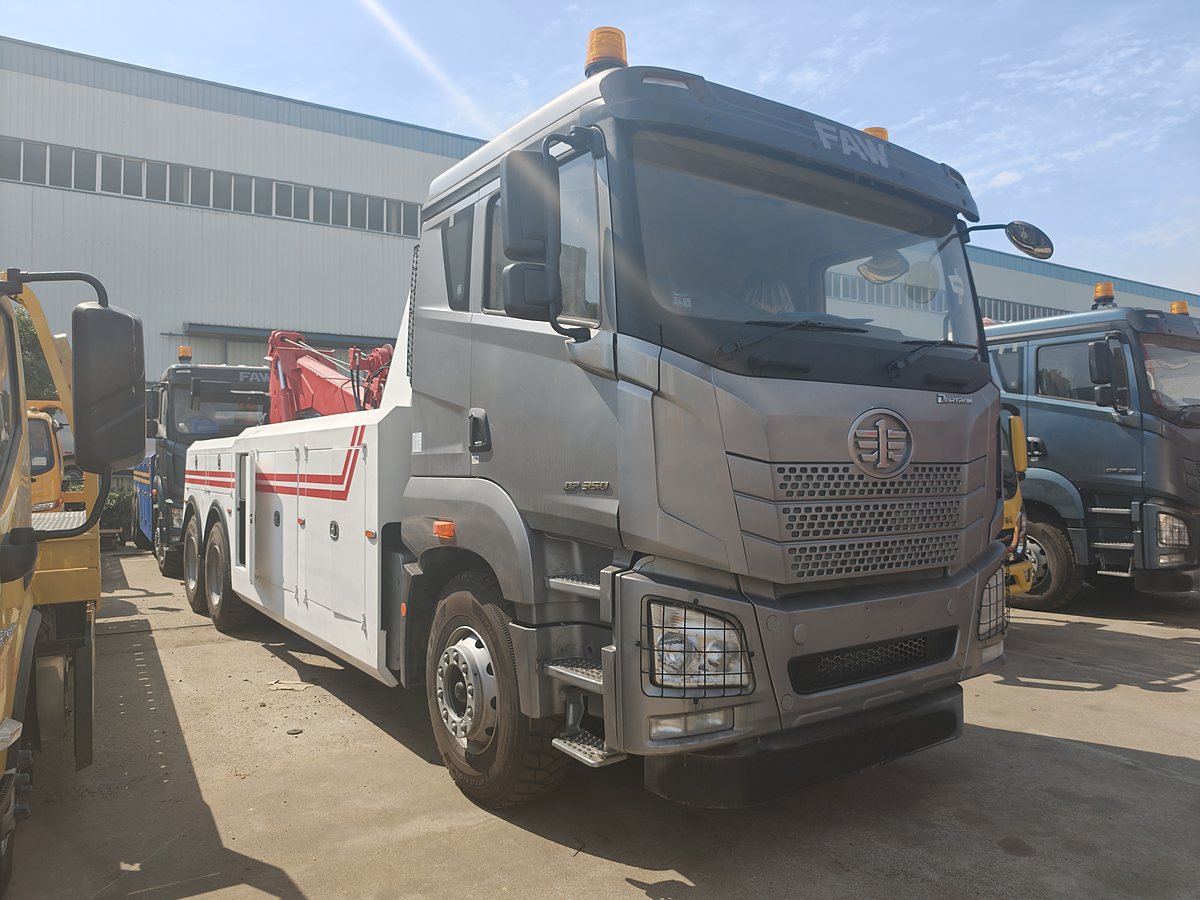
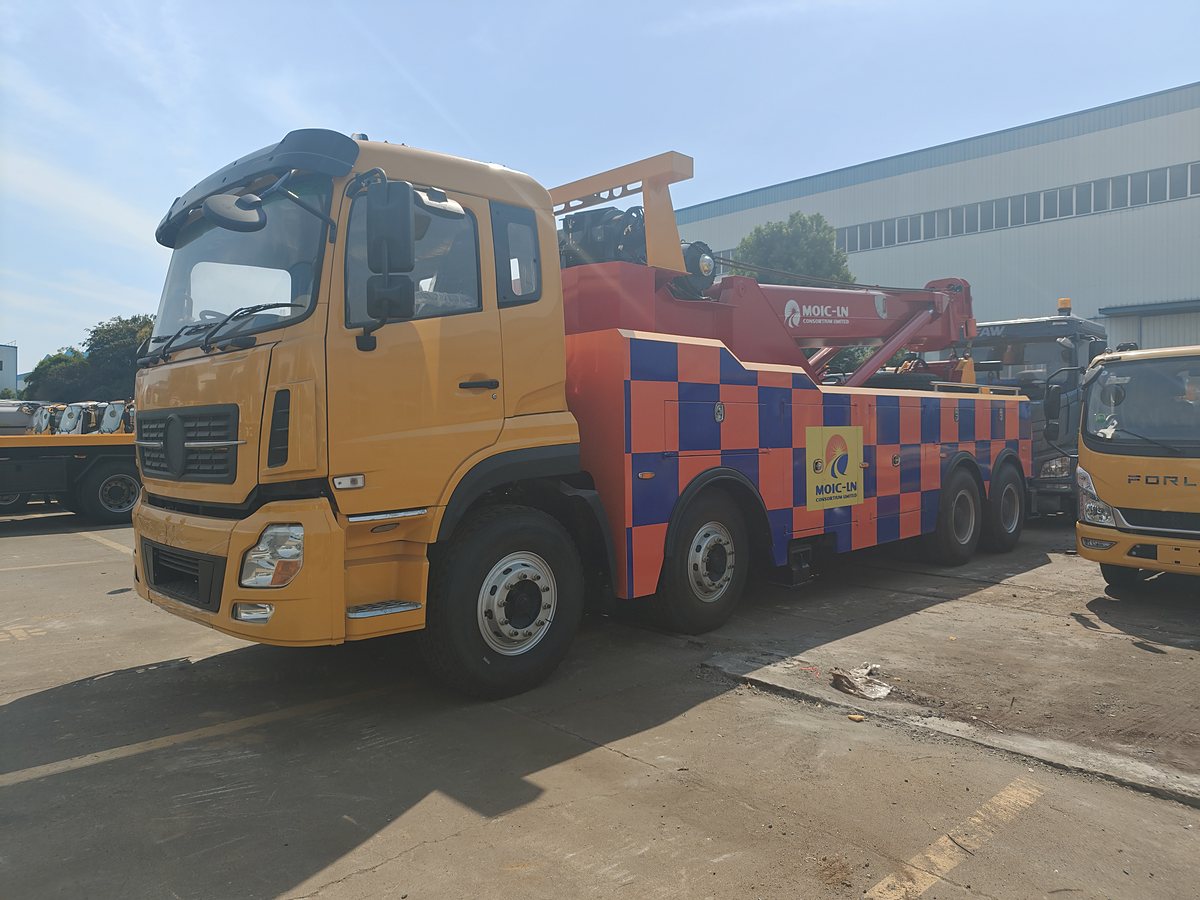
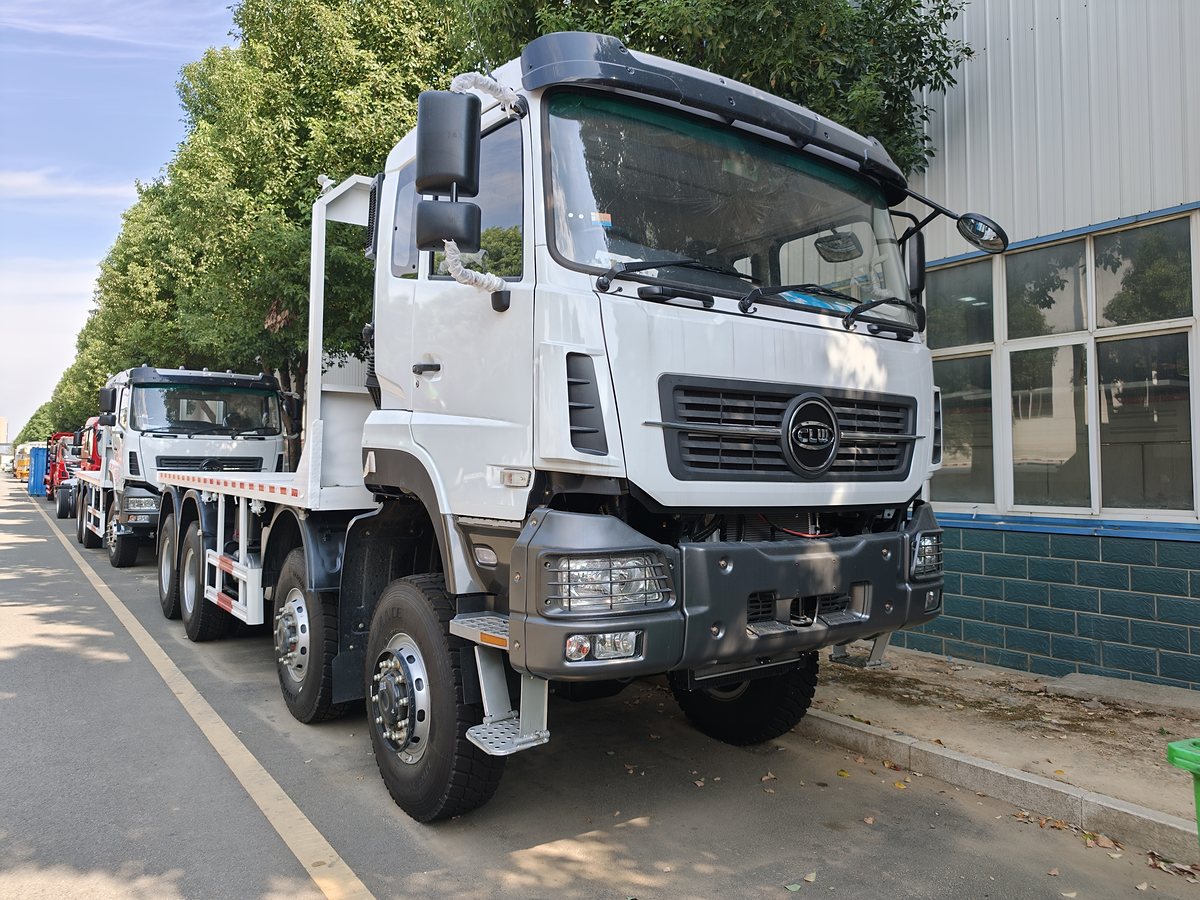
For recovery-vehicle suppliers and their distributors, the significance of the Ghanaian measure lies in the way it converts roadside recovery from discretionary spending into a financed obligation. Where owners must hold towing cover or a subscription, there is a defined payer and a defined duty, and the equipment mix follows directly from the vehicles that break down: light and medium underlift or wheel-lift units for cars and vans, heavier recovery units and flatbed carriers for trucks, tankers, buses and articulated combinations. The dispatch model described by the NRSA adds a second requirement — the platform can only route a driver to the nearest towing vehicle if the number and spread of those vehicles is adequate, which puts fleet density and response time at the centre of how operators will be judged and licensed. The 2016 episode also supplies a procurement lesson. The policy failed once because owners did not accept either the fee or the way the single contractor was selected; a market built on mandatory subscriptions only works when the cost is modest, the rules are published, and the operators doing the work are visible to the public they serve.