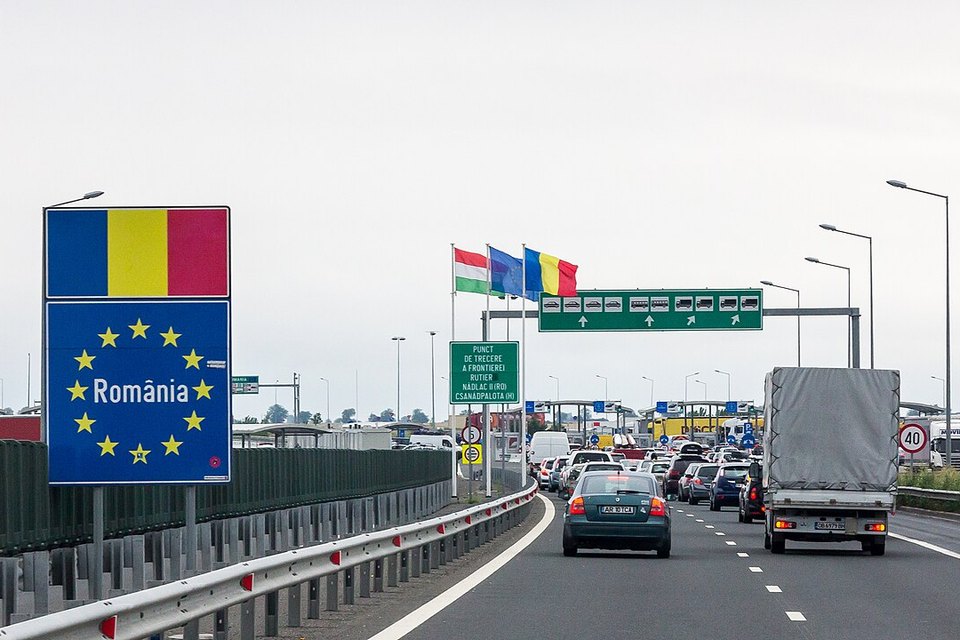
Romania has switched its heaviest road users from a time-based sticker to a pay-per-kilometre bill. Since 1 October 2026, goods vehicles above 3.5 tonnes maximum authorised mass no longer buy the roviniete; they pay TollRo, a toll charged for every kilometre run on motorways, expressways and national roads, whether the vehicle is registered in Romania or abroad. The rate depends on three things: the weight category (3.5 to 7.5 tonnes, above 7.5 and below 12, and 12 tonnes or more), the Euro emission class, and the type of road. A vehicle of 12 tonnes or more meeting Euro VI pays 0.48 lei per kilometre on a motorway and 0.24 lei on a national road; Euro V-IV trucks pay roughly 15 per cent more and Euro III-or-older trucks about 30 per cent more, so the schedule itself pushes operators toward newer, cleaner chassis.
Eight days into the new system, the tariff gained a fourth column. Order no. 959/2026 of the interim Minister of Transport and Infrastructure, published in Monitorul Oficial, Part I, no. 847 of 8 October 2026 and in force the same day, adds a dedicated rate for electric goods vehicles: the Euro VI rate reduced by 75 per cent and rounded down to the ban (the hundredth of a leu), with the calculation redone after every annual indexation. From 8 October, an electric truck above 12 tonnes pays 0.12 lei per motorway kilometre instead of the 0.48 paid by its Euro VI diesel equivalent — 0.06 instead of 0.24 on national roads. In the 7.5 to 12-tonne band the electric rates are 0.07 and 0.03 lei; above 3.5 and up to 7.5 tonnes, 0.04 and 0.02 lei.
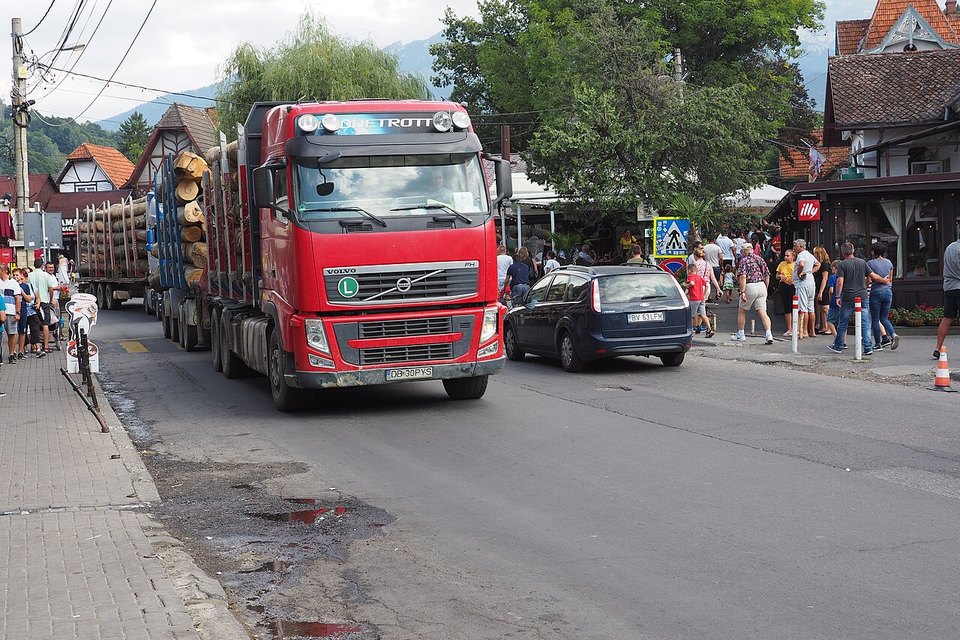
The arithmetic is easy to state. On a 500-kilometre motorway run, an 18-tonne electric vehicle now pays 60 lei against 240 lei for a Euro VI diesel and about 310 lei for a Euro III-or-older truck — a quarter of the bill, before any fuel or maintenance savings are counted. For fleets whose working life is fixed municipal duty cycles — waste collection, street washing, short-radius construction haulage — the toll line is now a standing argument for specifying electric chassis, and a standing penalty on the oldest diesel engines still on the road.
Payment and enforcement are digital-first. Operators settle through a route ticket bought before the trip — valid for one declared itinerary and 72 hours — or through the free CNAIR mobile application with an electronic wallet, which since the implementing rules of 30 September also serves foreign-registered vehicles, with menus in Romanian and English. The launch week was bumpy: the platform drew around four million visits in its first 12 hours, and when account creation and payments broke down, CNAIR committed not to sanction users who could not pay during the faults, which it said were fixed by 6 October, while the obligation to pay remained. Enforcement runs on cameras and roadside checks; where the distance driven cannot be established, the charge is fixed at 2,000 lei, no more than once every 12 hours. Interoperability with the European Electronic Toll Service is scheduled from 15 January 2027, after which a single on-board account will work across several EU tolling systems.
Romania is not improvising; it is catching up with Brussels. The reform rests on Law no. 226/2023 and transposes the logic of Directive (EU) 2022/362 — the user-pays, polluter-pays framework — which, subject to derogations, bars time-based user charges for heavy-duty vehicles on the core TEN-T network from 25 March 2030 and requires charges to vary with CO2 emissions. Romania is among the last EU member states to make the switch, and its tariff table — surcharges for Euro III-IV, a deep discount for electric — is precisely the shape the directive points toward. Operators routing through the region should assume the vignette-to-distance conversion will keep spreading.
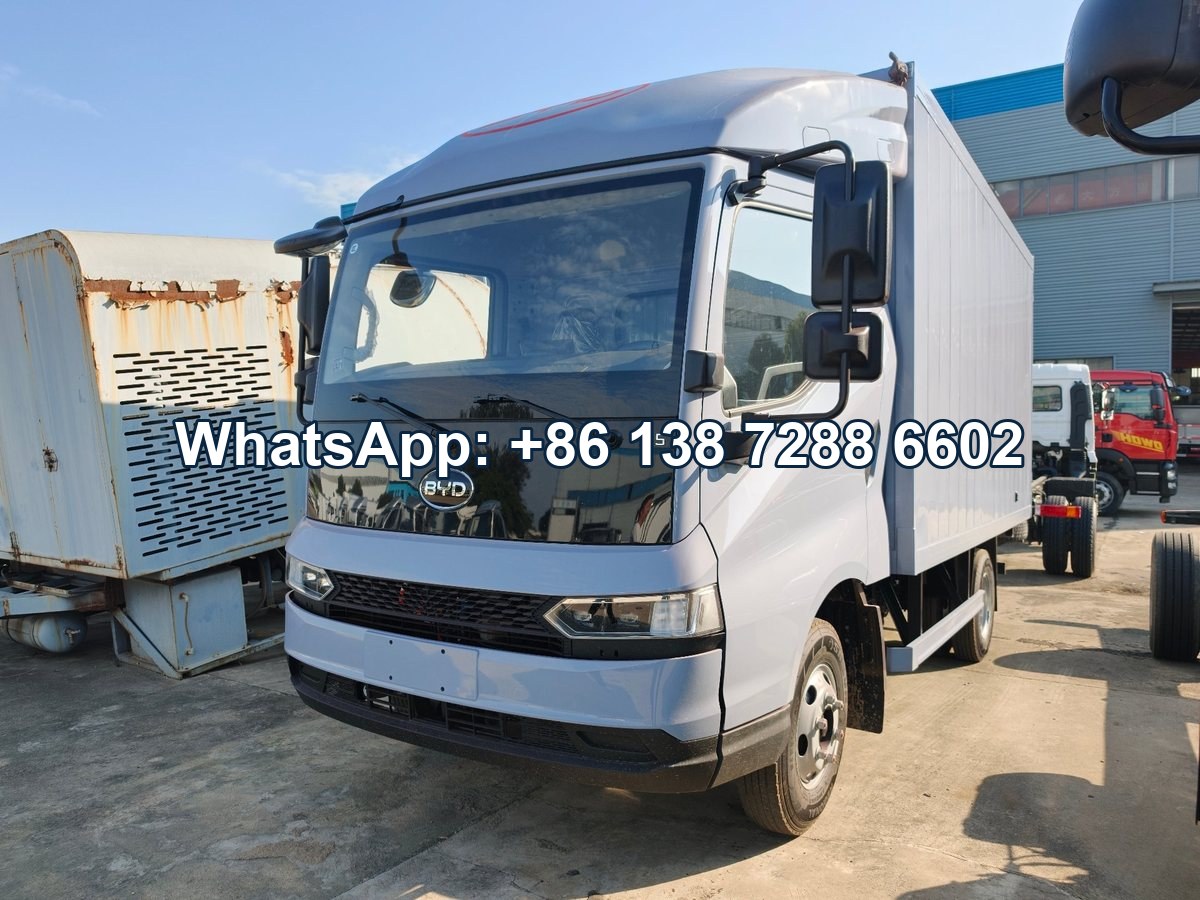
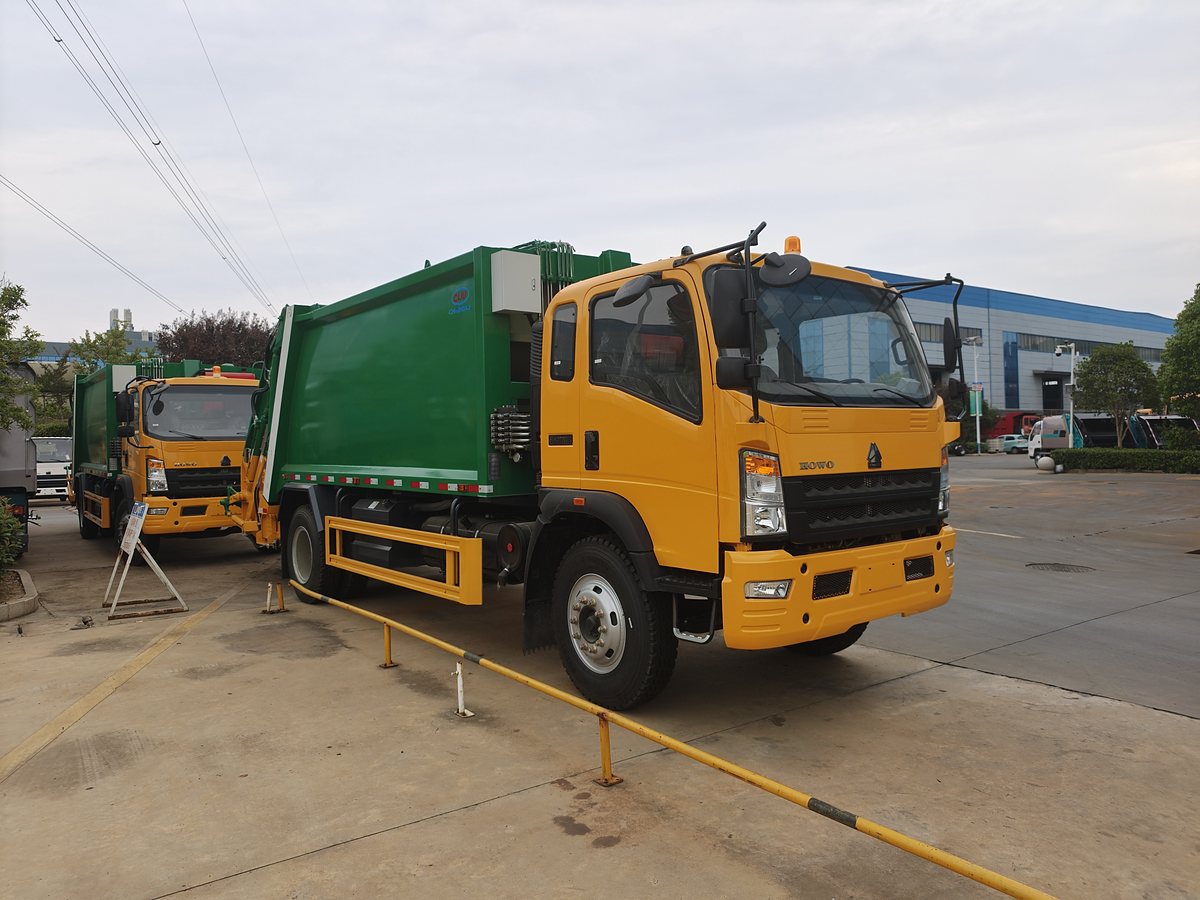
For exporters of trucks and special vehicles, three practical readings. First, Romania sits on the Black Sea gateway of Constanta and the transit corridors toward Moldova and Ukraine, so TollRo will land on many international itineraries, not just domestic fleets; quoting a Romanian customer now means quoting a per-kilometre toll line in the running costs. Second, the tariff pays a 75 per cent refund on every kilometre to electric chassis — which makes municipal segments such as compactors, sweepers and light tippers, with predictable daily routes and overnight depot charging, the natural first candidates, and it makes Euro VI non-negotiable for any diesel sale. Third, the toll is only one line of the file: EU whole-vehicle type approval, charging infrastructure and after-sales coverage still decide whether an electric special vehicle can actually be delivered and kept running — the discount gets the customer to the table, not to the signature.