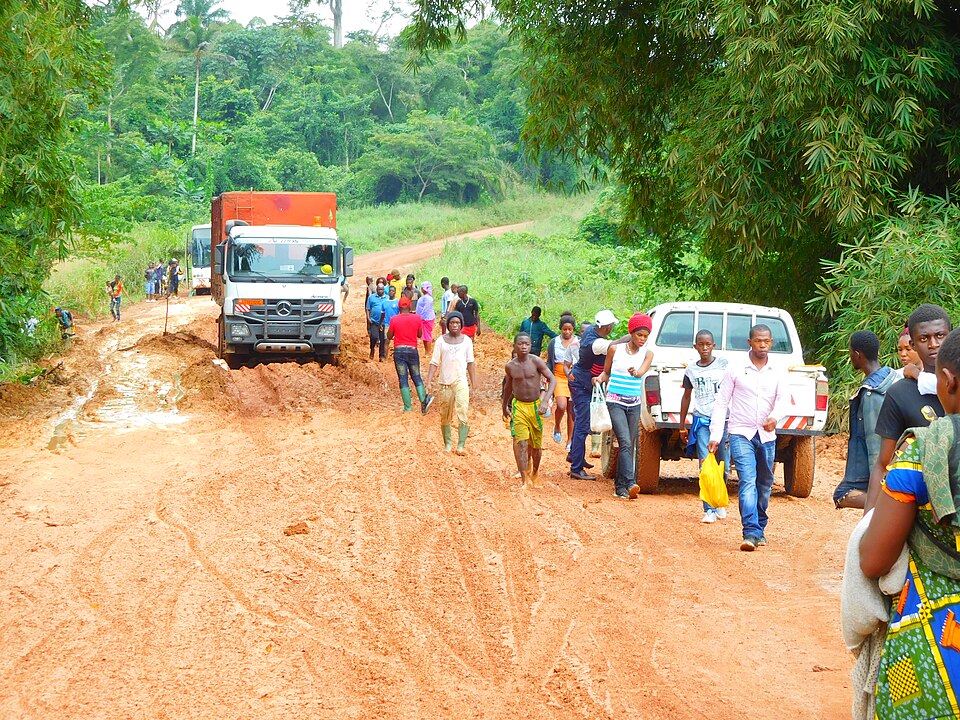
The tender follows a 2 October presidential authorisation for a EUR 347.5 million loan — about CFAF 228 billion — from the International Bank for Reconstruction and Development. The wider Douala–Bangui Economic Corridor Improvement Programme was approved on 12 June with a total value of US$1.12 billion. Phase 1 totals US$525 million, of which US$425 million is allocated to Cameroon, comprising US$407 million from the IBRD and US$18 million from the International Development Association, alongside US$90 million for the Central African Republic and US$10 million for the Central African Economic and Monetary Community.
The 167 kilometres are divided into three lots to be rebuilt simultaneously: Lot 1 from Yaoundé to Madoumba (52.05 km), Lot 2 from Madoumba to the Ndoupé Bridge (52.05 km) and Lot 3 from the Ndoupé Bridge to the Edéa Junction (62.90 km). The scope covers full roadbed reconstruction, curve realignment and selective dualisation to a 2x2 carriageway on high-density stretches — 22.58 km on Lot 1, 10.75 km on Lot 2 and 12 km on Lot 3. Lot 1 also includes the construction and digitalisation of a modern weighbridge station intended to control heavy axle loading and protect the renewed pavement.
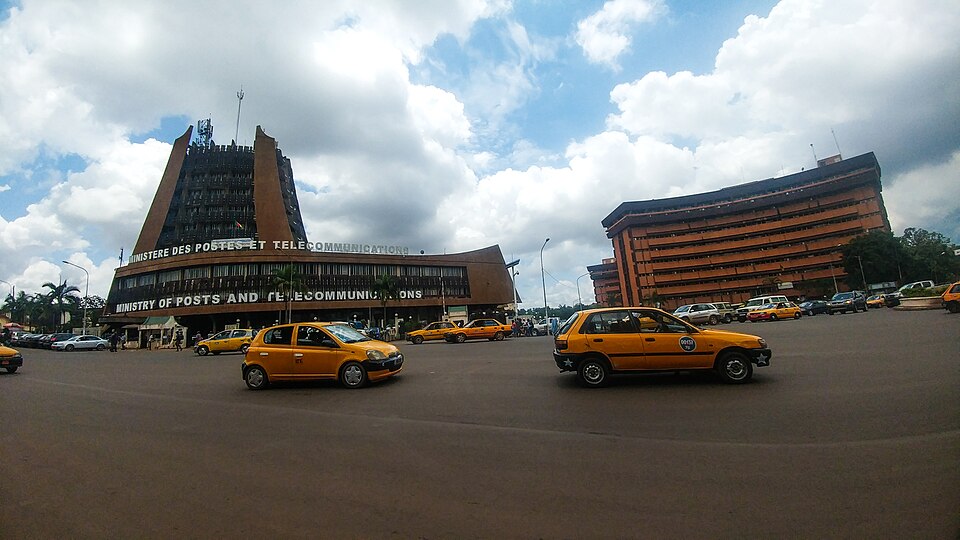
Yaoundé–Edéa forms the southern section of the Yaoundé–Douala corridor that feeds the Douala–Bangui route, which the World Bank says carries more than 80 per cent of the Central African Republic's foreign trade. Bank analysis accompanying the programme is explicit that road condition is only part of the cost problem: customs procedures, informal checkpoints, fragmented transit rules, a trucking market with limited competition and freight-sharing arrangements between Cameroonian and Central African carriers all constrain the corridor. The programme therefore pairs the civil works with trade facilitation measures, road safety components and multi-year performance-based maintenance arrangements.
On the Central African side, project documents identify the roughly 79-kilometre Baoro–Bossemptélé section on the Bangui–Garoua-Boulaï axis as a priority for rehabilitation. The World Bank estimates that the Central African Republic's Road Maintenance Fund currently covers less than 5 per cent of national needs after direct transfers from the fuel levy were suspended. A parallel route towards the Atlantic through Pointe-Noire, backed by the African Development Bank, is also advancing: the 69-kilometre Bossarangba–Mbaïki section and 4.5 kilometres of urban roads in Mbaïki were 98 per cent complete at the end of August.